Article
What Has Tinubu Done Right in the Past 4 Years?
The true cost of bad governance is this: You end up struggling really hard just to achieve the basic things, that are otherwise necessities not luxuries.
Cassius Samuel-Ejekwu 5 min read
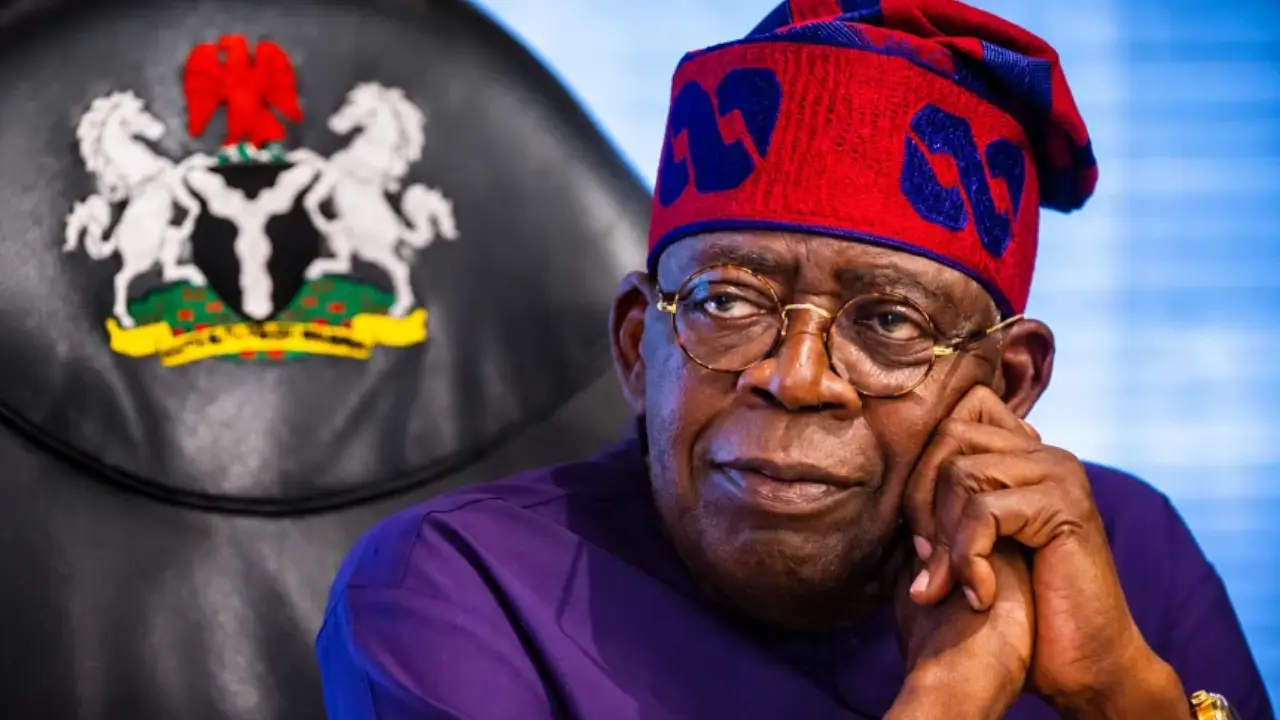
As bad as Nigeria has been in the past, it has arguably never been in such a precarious position that economic experts would consider it a miracle for the next president to resuscitate the country.
It is a truth universally acknowledged that the incumbent, Bola Ahmed Tinubu, has failed as president. I would go further and argue that his failure was not entirely accidental. From the onset, his administration appeared more concerned with enriching itself and its political cronies than with serving the general interest of the country.
To secure the presidency, Bola Ahmed Tinubu leaned on two deeply entrenched tendencies in Nigerian politics: tribalism and political opportunism. Among the rhetoric that defined the campaign was the declaration, "Omo Igbo would never be President!"—a bigoted taunt aimed at Peter Gregory Obi, former Governor of Anambra State and one of Tinubu's major opponents. What makes this rhetoric especially corrosive is that it was never meant to persuade on policy; it was a mobilization tool, deployed to consolidate a bloc vote by converting ethnic anxiety into political capital. And it worked precisely because it exploited the same patronage logic that fuels election violence: a political class that benefits from a divided electorate has every incentive to keep ethnic fault lines sharp. That some still cling to the sentiment while struggling to make ends meet is the deeper tragedy—the very people the system fails are the ones most invested in defending its tribal hierarchies, underscoring how effectively identity politics substitutes for material accountability in Nigeria.
Out of hatred for the cockroach, the ants voted for the insecticide. They all died, including the housefly that didn't even vote!
— African adage
What this administration is doing wrong
Have you entered into a branch of everyday supermarket recently? If you have, you'd have noticed how dry it looks, shelves empty not deliberately, but because people don't have the purchasing power anymore.
How he got into power is now secondary to the damage he is inflicting on the economy, seemingly on a daily basis. Critics, including opposition figures like Bolaji Abdullahi of the African Democratic Congress (ADC), argue that major economic policies have triggered high inflation, soaring food prices, and unprecedented strain on household incomes. But we don't need critics to tell us that this man is destroying the economy.
One would be forgiven for wondering whether the administration adequately considered the economic consequences of implementing these reforms simultaneously: fuel subsidy removal, devaluation of the Naira, the withdrawal of certain education and transport support measures, and additional taxes and levies on financial transactions. It is as if they were deliberately trying to make Nigerians poorer. Over the past few years, unemployment has risen as international firms have withdrawn from the country—attributable to heavy taxation—while the cost of living has climbed, median incomes have stagnated, incidents of terrorism and Christian-targeted violence have increased, and the middle class has been steadily eroding.
Politicians have weaponised poverty, and it has become a weapon of mass disruption.
— Muktar Mohammed (Nigerian Economist)
Where do we go from here?
Nigerian politicians have struck gold because Nigerians have developed an extraordinary ability to adapt to hardship. As the country deteriorates, its people simply find new ways to survive.
You see people selling smaller portions of yam, a quarter of a full yam, or half a plantain. What economists might describe as the sachetization of the Nigerian economy. Petrol becomes unaffordable? You buy a solar panel. A particular food becomes too expensive? You abandon it for a cheaper, often less nutritious alternative. Rent becomes unbearable? You move in with roommates.
Nigerians have become remarkably resourceful at surviving a system that should be working for them. They do everything but hold the government accountable.
Maximum Petrol Pump Price per Administration in Nigeria (1999–Present)
Maximum pump price per liter recorded during each administration or term, using the highest figure stated in the source for each period. Years: OBJ (1999–2007), Yar'Adua (2007–2010), Jonathan (2010–2015), Buhari 1 (2015–2019), Buhari 2 (2019–2023), BAT (2023–Present).
Unit: ₦ per liter
Tap or hover to inspect values. Use arrow keys when focused. Swipe sideways on dense charts.
Select a point or bar to see the category and exact values here.
- Maximum pump price (₦ per liter)
View chart data
| Category | Maximum pump price (₦ per liter) (₦ per liter) |
|---|---|
| BAT | 1,500 |
| Buhari 2 | 210 |
| Buhari 1 | 145 |
| Jonathan | 141 |
| Yar'Adua |
Every election cycle in Lagos, thugs affiliated with opposing political parties begin clashing months before the actual elections, wreaking havoc and spreading fear in places like Mushin and Ikorodu. These clashes are not spontaneous outbursts of political passion—they are the visible output of a kingpin structure in which party patrons cultivate loyal enforcers through cash handouts, protection, and the promise of post-election rewards.
This patronage system creates a perverse incentive: unemployed youths, facing scarce legitimate opportunities, are recruited into violence because it offers immediate material gain and a path to political relevance that the formal economy denies them. The kingpins who sponsor these clashes bear little risk themselves, while the youths who carry out the violence absorb the legal and physical consequences—making the recruitment pipeline both exploitative and self-perpetuating.
You see politicians' children spend an amount that could repair a few roads in a week, yet you wonder why they don't use the money to provide and maintain public amenities. If it were that simple, they could fix the roads and still embezzle. The country's resources are far greater. This highlights a deeper issue: they are not merely corrupt but deliberately keep people in abject poverty. That was the legacy of the former governor of Rivers State, who kept Ikwerre youths dependent on political thuggery for a living. "Oboy, W*ke dey airport, make we mount there!" Young men, deprived of meaningful educational and economic opportunities, find themselves surviving on peanuts gotten by chasing the convoy of politicians or their children.

Photo by Nohe Pereira on Unsplash
KINGPIN
What did you expect? That a man widely regarded as a political godfather would become president and suddenly reform the country, despite having thousands of political loyalists and associates whose interests are tied to his continued dominance? No.
A kingpin maintains power by ensuring that his subordinates feel financially rewarded, protected and respected. As long as the thousands of corrupt mouths beneath him are adequately fed, they have every incentive to support him and keep him in power. Consider what he did with Akpabio, who was under EFCC prosecution: he cleared him of all charges and immediately appointed him Senate president. It was an incredibly smart move because now Akpabio approves every policy he proposes, and any international loan he seeks, without hesitation—it is bizarre.
This is why replacing the man at the top may not be enough. Real reformation must go beyond removing one individual; it must dismantle the political structure that sustains him. Until that happens, those who benefit from the system will continue to defend it, even at the expense of the country.
Why is it so easy for politicians to get away with corruption? Because the average Nigerian has been conditioned to worship money. That's it.
Politics has become one of the most lucrative routes to wealth in Nigeria. The constitutional and legal protections afforded to public officeholders, alongside weak accountability mechanisms and the slow pace of prosecution, make it difficult to envision a system where political corruption carries consequences proportionate to the damage it causes.
Ultimately, the problem is bigger than Tinubu or any individual politician. It is a system that rewards loyalty over competence, patronage over public service, and wealth over integrity. Until Nigerians begin to value accountability more than political affiliation and financial handouts, the cycle will continue. A country cannot be rescued by simply changing the people at the top when the very system that produces them remains intact.
If I don't give you constant electricity for four years, when I come back for a second term, don't vote for me
— Bola Ahmed Tinubu